
Yusef Majidzadeh (1936-2026): in memoriam
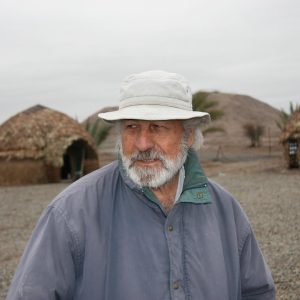
Yusef Majidzadeh, the renowned Iranian archaeologist and longtime professor of archaeology at the University of Tehran, passed away on 9 October 2026 in Nice, southern France. Majidzadeh was born in Tabriz in 1936. With the outbreak of the Second World War and the Red Army’s presence in the Tabriz region, his family moved to Tehran, where he attended elementary school and completed his secondary education. After completing his military service in 1959, he was hired by the then Edāre-ye Farhang-e Ammeh va Mardomshenāsi (Office of Popular Culture and Ethnography), part of the Ministry of Culture. He later recalled his two years at the Mardomshenāsi office as a formative period that helped shape his professional future, during which he learned drawing and painting and met with its prominent director, Sadegh Kiā, a professor of ancient Iranian languages at the University of Tehran. Majdizadeh’s interest in studying archaeology was prompted – as he recounts – during a trip to Luristan in 1960, where he visited the ruins of a Sasanian bridge over the Kashkān River.
Between 1960 and 1962, he studied archaeology at the University of Tehran under prominent scholars of the time such as Ali Naghi Vaziri, Ezatollah Negahban, and Isa Behnam. As the best student of the department, he was granted a scholarship to study abroad in 1965. He finished his Master’s degree at the University of Chicago in 1970. Upon his return to Iran, he was hired by the Department of Archaeology of the University of Tehran and participated in the teaching program and training of students under Professor Negahban. In 1976, he obtained his doctorate at Chicago under the direction of Helen Kantor and Robert M. Adams, with a substantial dissertation entitled The Early Prehistoric Cultures of the Central Plateau of Iran. The dissertation was the first breakthrough in studying the less-known and scattered evidence of cultural dynamism in central Iran during the Early Chalcolithic period.
He returned to Iran and became an Associate Professor at the University of Tehran until his premature retirement in 1988. During his tenure at the university, Majidzadeh redesigned and improved the teaching curriculum for archaeology courses and trained an entire generation of archaeologists in Iran. He participated in and directed fieldwork and excavations at important sites such as Chogha Mish in Khuzestan, Tepe Qabrestan in the Plain of Qazvin, where he was the field director on behalf of the University of Tehran. He later published the excavation report as Excavations at Tepe Ghabristan, Iran, Rome, 2008.
During most of the 1980s and 1990s, Majidzadeh devoted his time to writing. He was invited to be on the editorial board of the newly founded Iranian Journal of Archaeology and History, and published important articles as well as some of his previously unpublished field reports. The culmination of that period is undoubtedly his book in Persian, The Beginning of Urbanism in Iran, Tehran, 1989.
In 1998, he was invited to carry out excavations at the multiperiod site of Ozbaki, 75 km northwest of Tehran. Ozbaki is a cluster of sites, covering 100 hectares and ranging in date from the 6th millennium BC to the Iron Age period. Six seasons of excavations at Ozbaki led to the discovery of one of the oldest mud-brick buildings in central Iran as well as that of an imposing Iron Age/Median fort. Aside from preliminary reports in Persian or French, the results were fully published in four volumes.
After the chance discovery and looting of the archaeological sites in Jiroft in southern Iran in 2000, the Iranian Cultural Heritage Organization launched a large-scale fieldwork project at Jiroft, the direction of which was entrusted to Yusef Majidzadeh. Excavations at the imposing mounds of Konar Sandal as well as the nearby looted graveyard revealed the existence of a flourishing Bronze Age center in contact with urban sites of the Indus Civilization and those of southern Mesopotamia during the third millennium B.C. The excavations lasted for six seasons before being interrupted in 2005. As Jalal Rafifar, a former student of Majidzadeh and now a professor of anthropology at the Faculty of Social Sciences in Tehran, notes, the significance of both the Ozbaki and Jiroft excavations extends beyond their archaeological results. In fact, “the projects provided an opportunity for the practical training of a new generation of archaeologists. A considerable number of Iranian and international students and young archaeologists gained hands-on experience working alongside Majidzadeh as trainees, learning excavation methods, the recording and documentation of finds, and archaeological research techniques.” Majidzadeh’s reports and his book, Jiroft: The Earliest Oriental Civilization, remain the most authoritative publications on the third- millennium B.C. Civilization of the Halil Rud basin.
Yusef Majidzadeh was an excellent teacher, a talented draughtsman and painter, and a skilled field archaeologist. He belonged to a generation that benefited from Iran’s economic growth and cultural developments in the 1960s and 1970s. Majidzadeh is the author of ten books and dozens of scholarly articles in Persian, English, and French. As Rafifar reminds us, “What makes his career significant is not merely the number of publications he produced or the importance of the archaeological sites he explored. His great lesson for us is his unrelenting commitment to scholarly research through the challenging circumstances of his professional and personal life.”
Ali Mousavi